


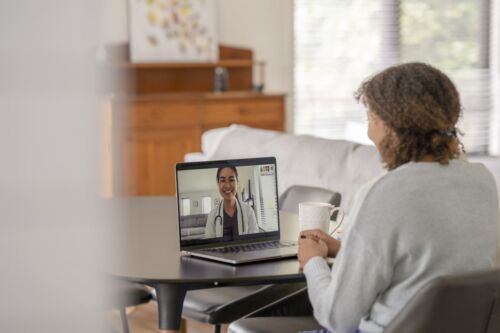
Let’s face it: the last thing you want to do when you’re not feeling yourself is drag yourself to the doctor’s office, sit in a crowded waiting room, wait even longer in the exam room, only to spend a few minutes with the doctor before being ushered out the door.
That’s just one of the reasons telemedicine has been such a welcome development. There is a lot of upside to the technology. Seniors and people with mobility or transportation issues can access medical care more easily. Vulnerable patients can avoid picking up infections in waiting rooms. And telehealth visits can allow doctors to see patients more efficiently. But there are downsides, too. Sometimes, patients are more vulnerable to medical malpractice when they don’t have in-person visits with their doctors. Learn why, and how to protect yourself.
Until less than a decade ago, almost all doctor visits were in person. That meant that doctors could perform physical exams: palpating abdomens and lymph nodes, listening to the patient’s heart and lungs with a stethoscope, testing reflexes, and so on.
That hands-on aspect is missing from many telemedicine visits, and that limits what a physician can directly observe. In telemedicine, doctors are much more reliant on patients’ descriptions of their symptoms. Poor lighting or low-quality video can further limit a doctor’s ability to observe signs that might lead them to ask deeper questions or conclude that an in-person follow-up is necessary.
Documentation issues can also contribute to telemedicine malpractice; many professionals have observed that telemedicine visits are less thoroughly documented than in-person visits. If a physician fails to document the limitations of their assessment, the risk of malpractice may rise, including the risk of a missed diagnosis. Medication and testing errors may also be more frequent with telemedicine, especially when patients are not given clear instructions, and medical staff members fail to follow up.
Licensing can also be an issue; while doctors must obviously be licensed in the state in which they practice, with telemedicine they must also be licensed in the state where the patient is. Under Oregon law, the “practice of medicine” takes place where the patient
Remember: Oregon regulations are clear that telemedicine doesn’t change the standard of care to which doctors are held. That said, the nature of virtual medical appointments may create obstacles to upholding that standard. What can you do to protect yourself?
Patients are never responsible for a provider’s telemedicine malpractice, but as a patient, you can take steps to keep your providers accountable, avoid misdiagnosis, and get the care you need.
This is something most people don’t think to do, but confirm that the doctor, physician’s assistant, or nurse practitioner with whom you will be meeting is licensed to practice in the state where you are located.
Being up-front can help you and your medical provider get off on the right foot. Ask for information about their telemedicine policies, especially regarding how they determine the need for testing or in-person follow-up care. Be direct with your concerns about the limitations of telemedicine, such as the inability of the doctor to perform a full physical examination, and ask your doctor what safeguards are in place in light of those limitations.
It’s always important to advocate for the care you need in medical situations, but it’s especially important in telemedicine settings. Because your doctor is relying only on what she can hear and see through the screen, you must communicate clearly and thoroughly to ensure she has all the information she needs to give you the best care and to avoid misdiagnosis. That includes:
It’s critical that you understand what medications your doctor is prescribing, for what reasons, and in what dosages. Ask about potential side effects, too. Prescription mistakes, including overprescribing, may happen more frequently in telemedicine settings than in in-person care, so be sure that the medication you receive is precisely what your doctor ordered, and be sure to contact your doctor if you have concerns about side effects you’re experiencing or if the medication doesn’t seem to be working as intended.
Your health matters are personal, and should be private. That’s usually not an issue when you have a visit in your doctor’s office, but it may be when you have a virtual visit. While a privacy breach doesn’t constitute medical malpractice, it’s still something you want to avoid. Best practices for protecting your private medical information include:
If you have been seeking medical care through virtual visits, and you think your doctor has been negligent in your treatment, you may be entitled to compensation for any injury you suffered as a result. To learn more about telemedicine and medical malpractice, or to discuss your specific situation, contact the Fraser Law Firm to schedule a consultation.

© 2025 The Fraser Law Firm P.C.
| View Our Disclaimer | Privacy Policy
